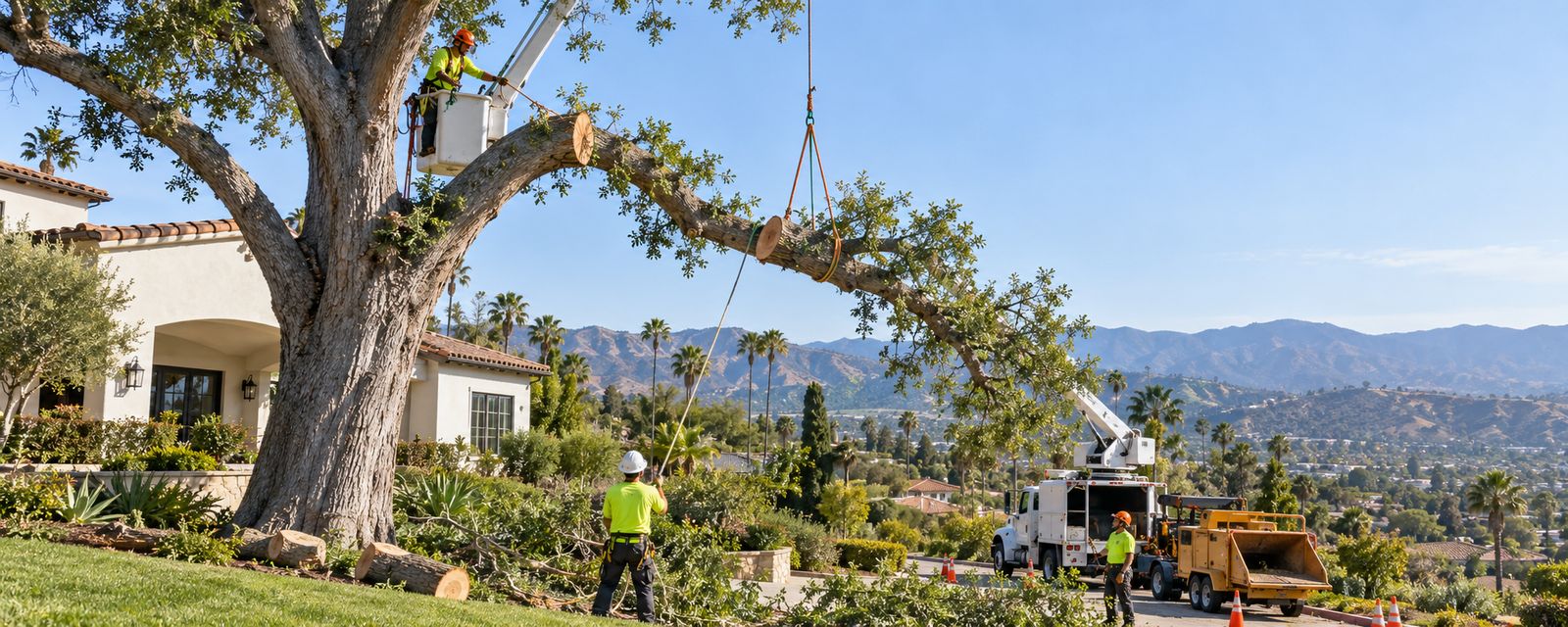
Before you schedule a tree removal in Los Angeles County, check whether the tree is protected. The rules depend on where you live and what kind of tree it is, and removing a protected tree without a permit can bring replacement requirements and penalties.
City of Los Angeles: protected native trees
The City of LA's protected tree ordinance covers these native species once the trunk measures 4 inches or more in cumulative diameter, measured 4.5 feet above the ground:
- Native oaks, including coast live oak and valley oak (scrub oak is excluded)
- Southern California black walnut
- Western sycamore
- California bay
Two native shrubs, toyon and Mexican elderberry, are also protected. Removing or relocating any of these, or doing work likely to kill one, requires a permit through the city's Urban Forestry Division. Applications are prepared by a qualified tree expert, and approved removals usually must be replaced with new trees.
Street and parkway trees
The tree in the strip between the sidewalk and the street usually isn't yours. In the City of LA, parkway trees are managed by StreetsLA, and trimming or removing one requires a permit, even if it's dropping limbs on your car.
Unincorporated LA County
If you live in an unincorporated area such as Altadena, Topanga, or Hacienda Heights, the county's oak tree ordinance generally protects native oaks above a size threshold. Check with LA County Regional Planning before cutting.
Other cities set their own rules
Each of the county's 88 cities can adopt its own tree ordinance. Cities with notable tree protections include Beverly Hills, Santa Monica, Pasadena, and Malibu, where rules cover native species and sometimes other large trees. Call your city's planning or public works department before removing a large or native tree.
Western Joshua trees
In the Antelope Valley, including Lancaster and Palmdale, western Joshua trees are protected under state law. Removing one requires a permit from the California Department of Fish and Wildlife.
What usually doesn't need a permit
- Removing common non-native trees like ficus, eucalyptus, or palms on private property in many cities (confirm locally)
- Routine trimming of your own non-protected trees
- Stump grinding after a legal removal
Emergencies
If a tree has failed or is actively falling, safety comes first. Even so, document the condition with photos and notify your city afterward if the tree may have been protected.
This article is general information, not legal advice. Ordinances change, so confirm current rules with your city.
Need a tree taken care of in Los Angeles County?
Call now to get connected with a licensed, insured local crew for a free quote.
(877) 552-8556Keep reading
- How to Tell If a Tree Needs to Be Removed
- The Los Angeles Homeowner's Guide to Tree Trimming
- Stump Grinding vs. Stump Removal: Which Do You Need?
- Fire Season Tree Maintenance for Los Angeles Homeowners
Back to LA Tree Removal Pros home.